Attractions and Places To See around Saint-Cyr-La-Roche - Top 18
Best attractions and places to see around Saint-Cyr-La-Roche include historical and religious sites within a scenic rural setting in the Corrèze department of central France. The commune features heritage sites and offers access to a variety of points of interest. Visitors can explore local landmarks near Saint-Cyr-La-Roche and discover the region's cultural significance.
Best attractions and places to see around Saint-Cyr-La-Roche
- The most popular attractions is Saillant Chapel and Marc Chagall Stained Glass Windows, a religious building known for…
Last updated: November 6, 2026
Church of the Transfiguration of Our Lord
Highlight • Other
Translated by Google •
Tip by

Château de Saillant
Highlight • Castle
Translated by Google •
Tip by

Sign up now to discover places like this
Get recommendations on the best single tracks, peaks, & plenty of other exciting outdoor places.
Saillant Chapel and Marc Chagall Stained Glass Windows
Highlight • Religious Site
Translated by Google •
Tip by

Old mine
Highlight • Other
Translated by Google •
Tip by

Stone Cross Memorial
Highlight • Monument
Translated by Google •
Tip by
Sign up for free to discover even more attractions around Saint-Cyr-La-Roche.
Already have an account?
Start today with a free account
Your next adventure awaits.




Tips from the Community


beautiful bridge
0
1

This stone cross rising from the brick base may appear intact at a first glance, but it's worth a second closer look: the cross apparently once had a body, which has since been removed. Where the longitudinal and transverse beams meet, the outlines of the corpus that was formerly attached can still be seen in the stone. Also clearly visible are the holes that marked the nails on the outstretched arms and feet, with which the figure of Christ crucified had been fixed to the stone.
3
0
This church is not - as is usually the case - dedicated to one of the many people we venerate as saints, or to Mary the Mother of God or her son. Instead, it bears a biblical event as its patronage title, namely the "TRANSFIGURATION de NOTRE SEIGNEUR" (called "Transfiguration of the Lord" in German-speaking countries). => "In the middle of everyday life, three disciples have an Easter experience with Jesus: They see Jesus in a mysterious light, and Moses and Elijah talk to him. In this way, the deepest identity of Jesus as the "beloved son" of God is revealed to the disciples." This is what is said in brief in a work aid from the Bible work for the Feast of Transfiguration, which is celebrated in all Christian denominations on August 6th. This event, which is attested to in the New Testament - see Mark (chapter 9) and Luke (chapter 9) as well as Matthew (chapter 17) - is located on Mount Tabor in Israel. A basilica was built there to commemorate (see https://www.komoot.de/highlight/266239), which can therefore be considered the original church for the patronage of this place of worship.
2
0

This former chapel has the last windows, designed by Chagall. These windows were commissioned by Mr. de Lasteyrie du Saillant, (owner of the 15th century castle, not visited). The stained glass windows (including so famously blue) represent the East: Creation and West: Two bouquets symbolize love. The windows of the nave are representative grisailles fieldwork in Salient sublimated by their symbolic symbol of the Eucharist through the harvest, wine through the harvest, the Shepherd and Servant through Christ's sheep through the fishery. Access to the chapel is open from 9am to 6pm.
1
0
A royal villa under the Merovingians, the land of the Saillant - Orbaciacus - was then a vassal of the Church, dependent in the 9th century on the abbey of Beaulieu and from the 11th century on the bishop of Limoges. The rectangular construction from the 15th century includes the remains of a primitive keep and was originally supposed to be enclosed by corner towers. The powerful stone corbels supporting the roof overhang come from the old machicolations whose upper part has been amputated and adapted to their new role. The cellars preserve remains of the primitive keep with openings in a slightly broken arch or semicircular. On the ground floor there is a monumental fireplace in the hall, the hood of which is decorated with murals. Staggered constructions from the 17th to the 20th century: openings, mansard roof, Periods of construction: 15th century, 17th century, 19th century
3
0

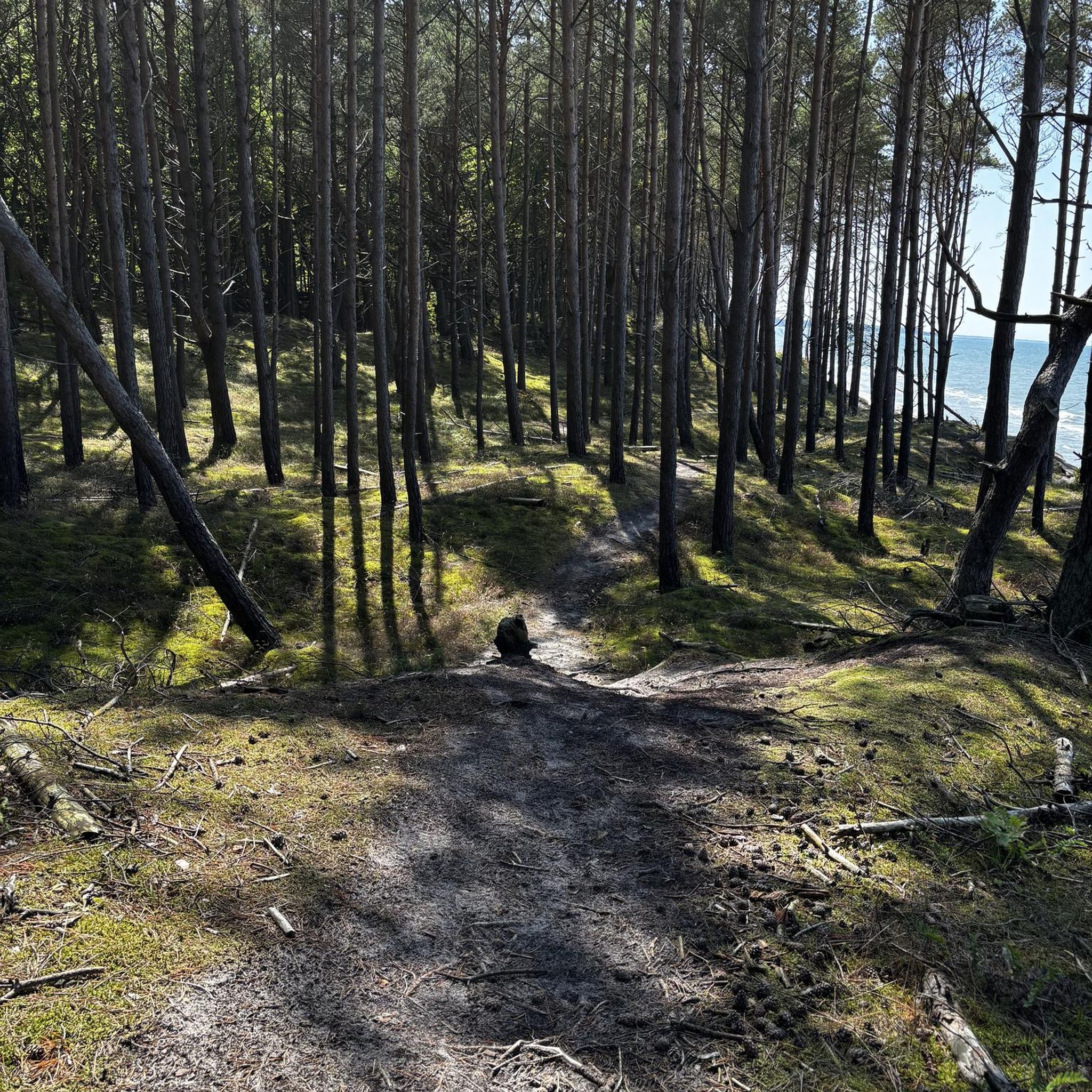
On a single, path between stones in an old mine. Sheltered by the trees it is pleasant to be in the shade in summer.
1
0

formerly attached to the castle of the salient it was built in 1620
1
0
Frequently Asked Questions
What are the most popular attractions around Saint-Cyr-La-Roche?
The most popular attraction is the Saillant Chapel and Marc Chagall Stained Glass Windows, known for its unique artworks. Other highly regarded sites include the Church of the Transfiguration of Our Lord and the historic Château de Saillant.
Are there family-friendly attractions in the Saint-Cyr-La-Roche area?
Yes, the Saillant Chapel and Marc Chagall Stained Glass Windows is considered family-friendly. Additionally, the nearby Ecopiscine d'Objat, an eco-friendly swimming pool, offers a great option for families.
What historical sites can I visit near Saint-Cyr-La-Roche?
The region is rich in history. You can explore the Château de Saillant, a 15th-century castle with Merovingian roots, and the Saillant Chapel. The Church of the Transfiguration of Our Lord, mentioned as early as 1264, also offers a glimpse into the area's past. Further afield, the impressive Castle de Pompadour and Castle de Hautefort are significant historical landmarks.
Are there any natural attractions or scenic spots?
While Saint-Cyr-La-Roche itself is set in a scenic rural environment, you can find natural beauty nearby. The Vézère River is approximately 5.2km away, offering picturesque views. For a unique experience, visit Les Pans de Travassac, slate quarries that provide a distinct natural and cultural landscape.
What outdoor activities are available around Saint-Cyr-La-Roche?
The area is well-suited for cycling. You can find numerous routes for cycling, gravel biking, and road cycling. These routes often pass by local attractions and through the scenic Corrèze countryside.
Where can I see unique art or architecture?
The Saillant Chapel is a must-see for its Marc Chagall stained glass windows, which represent themes of creation and love. The chapel itself, built in 1620, and the nearby Château de Saillant with its 15th-century construction and monumental fireplace, showcase notable architecture.
What is the 'Old mine' highlight about?
The Old mine highlight refers to a path through an old mine, offering a pleasant, shaded walk among stones. It's a unique spot for those looking for a different kind of historical exploration.
Are there any gardens to visit in the vicinity?
Yes, the English Landscape Garden of Colette in Varetz, about 11.3km away, is a notable site for garden enthusiasts. Another option is the Jardin Immaginaire in Terrasson-Lavilledieu, approximately 17.5km from Saint-Cyr-La-Roche.
What is the significance of the Church of the Transfiguration of Our Lord?
The Church of the Transfiguration of Our Lord is unique because it is dedicated to a biblical event, the Transfiguration of the Lord, rather than a saint. This event, described in the New Testament, signifies a profound moment in Christian theology.
What do visitors appreciate most about the attractions around Saint-Cyr-La-Roche?
Visitors often appreciate the blend of historical and religious sites, particularly the artistic significance of the Chagall windows at Saillant Chapel. The historical depth of sites like Château de Saillant and the unique patronage of the Church of the Transfiguration of Our Lord are also highly valued.
Is there a challenging historical monument to explore?
Yes, the Stone Cross Memorial is described as a challenging course. While appearing intact, a closer look reveals the outlines of a body that was once attached, making it an intriguing historical artifact for those seeking a more demanding exploration.
Most popular routes around Saint-Cyr-La-Roche

Get inspired with the komoot mobile app


Explore more
Still not found the Highlight you’re looking for? See guides of the top attractions in other regions:
