Attractions and Places To See around La Ferté-Villeneuil - Top 12
Attractions and places to see around La Ferté-Villeneuil include historical sites, natural landscapes, and cultural insights within the Eure-et-Loir department of France. The village is situated in the scenic Loir Valley and features extensive lavender fields, creating a distinct atmosphere. Visitors can explore remnants of its past as a fortified town, including historical gates and a fortified church. The area also provides access to the diverse fauna and flora of the Aigre Valley.
Best attractions and places to see around La Ferté-Villeneuil
- The most popular attractions is View of Montigny-le-Gannelon Castle, a castle that offers a beautiful viewpoint of its splendid Renaissance-style facades. The bridge crossing the Loir at Montigny-le-Gannelon provides a clear perspective of the building.
- Another must-see spot is Château de Châteaudun, a historical site approximately 10 km from La Ferté-Villeneuil. This castle features a blend of medieval, Gothic, and Renaissance architecture, including a well-preserved 12th-century dungeon and two sumptuous staircases.
- Visitors also love Monumental Fountain of Châteaudun, a large neo-Renaissance style fountain. Inaugurated in 1860, it symbolizes the arrival of a modern drinking water supply system in the upper town.
- La Ferté-Villeneuil is known for its historical sites, natural landscapes, and cultural insights. The region offers a variety of attractions to see and explore, from fortified churches to scenic river valleys and lavender fields.
- The attractions around La Ferté-Villeneuil are appreciated by the komoot community, with more than 50 upvotes and 37 photos shared.
Last updated: May 21, 2026
Château de Châteaudun
Highlight • Historical Site
chateau-chateaudun.fr
Translated by Google •
Tip by

Château de Montigny-le-Gannelon
Highlight • Castle
Montigny-le-Gannelon Castle dates from the Renaissance period; it was redesigned during the course of a restoration in the 19th century Neo-Gothic.
Translated by Google •
Tip by
Sign up now to discover places like this
Get recommendations on the best single tracks, peaks, & plenty of other exciting outdoor places.
Sign up for free
Monumental Fountain of Châteaudun
Highlight • Other
Translated by Google •
Tip by

Notre-Dame de la Boissière Chapel
Highlight • Religious Site
In 1248, according to Father Gordas, the Templars of the Boissiére and their pilgrimage hospital of Santiago de Compostela speak of the Cartular of the Madeleine of Chateaudun Abbey. After the disappearance of the Temple Order, the whole was transferred to the Order of St. John of Jerusalem.
fr.wikipedia.org/wiki/Commanderie_de_Notre-Dame-de-la-Boissi%C3%A8re
Translated by Google •
Tip by
Saint Peter's Church
Highlight • Other
Translated by Google •
Tip by
Sign up for free to discover even more attractions around La Ferté-Villeneuil.
Sign up for free
Already have an account?
Start today with a free account
Your next adventure awaits.
Login or Signup


Tips from the Community

The imposing structure known as the "Château de Chateaudun" that reveals itself to visitors here is, of course, also available in other sports in the komoot system. For the corresponding hiking highlight, you'll find further relevant information and additional photos under the tips. If you're interested, see =>> https://www.komoot.com/de-de/highlight/936307
0
0


At the gates of the Loir valley coming from Paris, between Chartres and Blois, the Château de Châteaudun raises its proud and massive silhouette to the eyes of the visitor who approaches it from the north. Property of Jean, bastard of Orléans, Count of Dunois and companion of Joan of Arc, it was a solid fortress before becoming a pleasant princely residence. Overlooking the Loir by more than 60 meters, Châteaudun Castle offers a succession of elements of medieval, Gothic and Renaissance architecture of exceptional authenticity. Clinging to its rocky promontory, the 12th century “big tower” is one of the tallest and best preserved dungeons in France. In the 15th century, Jean Dunois undertook work and transformed the castle, demolishing part of the fortifications. He made the old medieval castle a comfortable and bright residence and endowed it with a Sainte-Chapelle. In the following century, his descendants, the lords of Longueville, completed the construction of the chapel and enlarged the castle with the Longueville wing. The Dunois wing and the Longueville wing have two sumptuous staircases with loggias, one with flamboyant decor and the other from the Renaissance period. Château de Châteaudun also houses a remarkable collection of Flemish and French tapestries from the 16th and 17th centuries. The visit is completed by a medieval-inspired garden exploring the relationships between cuisine and medicine in the Middle Ages, while a hanging garden reveals a garden of idleness and relaxation, unique in the Central Region.
1
0
The community that was gifted with goods and established a command here is often referred to in a shortened form as the "Order of the Templars", but its full name is: "Poor Knighthood of Christ and the Solomonic Temple in Jerusalem". He gained notoriety through the fact that in 1312 this order was dissolved by the French king and the pope and many of its members met their violent end at the stake as alleged heretics. The main reason for the dissolution, however, was not the alleged human and religious misconduct of the members, but rather the legendary wealth of this order. King Philip IV of France primarily wanted to secure the treasures in order to supplement his coffers.
1
0

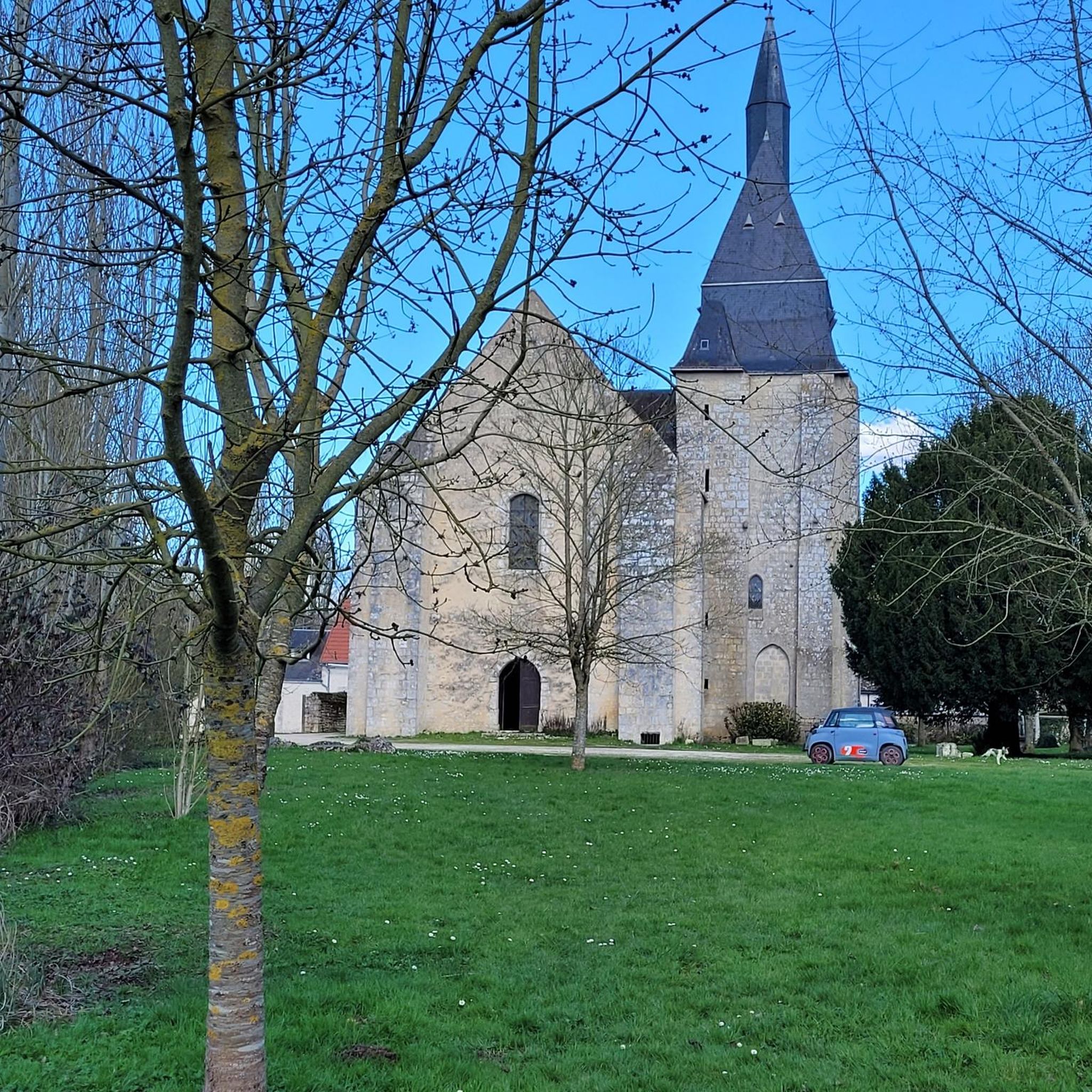
Before the 13th century there were two parishes, Saint-Sauveur and Saint-Gilles, in 1300 the bishop of Chartres united them into one by a charter of Berchères, because of the smallness of the two parishes. The church dates from the beginning of the 17th century. Rebuilt on the foundations of an old Romanesque church, its originality comes from its bell tower with saddle roof, its caquetoire and its paneled vault redone in 2003. At the initiative of the Prince Duke of Montmorency-Laval, it has contained the reliquary of Sainte-Félicité since 1838. Saint Félicité, whose relics are in Montigny-le-Gannelon, is a martyr whose life is unknown, whose body was taken from the sacred cemeteries of Rome. We have his body, the skull, the bones of his arms, fingers and feet. They were removed from the Saint-Cyriaque cemetery in 1828 and placed in their respective places on a body artistically modeled in wax and measuring more than 1.40 meters in length. A magnificent chase, of the shape and size of an altar tomb, all furnished with glazing and embellished with gilding received this precious deposit. Pope Leo XII donated it to the Duke of Laval, then Charles X's ambassador to Rome. On his death, he bequeathed it by will to the church of Montigny-le-Gannelon where the old historic castle of Laval-Montmorency is located. The venerated hunt is now placed under the main altar of which it forms the tomb.
0
0
This large neo-Renaissance style fountain was inaugurated in 1860 to symbolize the arrival a few years earlier of a modern drinking water supply system in the upper town. It is topped by a dome with lantern and a phoenix, this mythical bird which is reborn from its ashes and which perfectly symbolizes the rebirth of the city after fires, the most important of which was the dramatic fire of 1723.
0
0
magnificent view of the castle on the banks of the Loir with a small corner perfect for a picnic.
1
0
This church in Romilly-sur-Aigre was dedicated to Saint Peter (Saint Pierre). Simon, nicknamed Peter (Rock), was a fisherman on the Sea of Galilee when he - together with his brother Andrew - was called by Jesus Christ to be "fishers of men". According to Catholic understanding, he is the supreme apostle, and the two millennia-long line of popes - currently Francis - are his successor. On statues and paintings, Peter is almost always depicted with two keys in his hand; this attribute refers to the biblical saying in Matthew: “I will give you the keys of the kingdom of heaven; Whatever you bind on earth will be bound in heaven, and whatever you loose on earth will be loosed in heaven” (Chapter 16, verse 19). Peter and Paul are also known as the “Princes of the Apostles”; their common feast day in the saints' calendar is June 29th.
3
2
Frequently Asked Questions
What historical sites can I explore in and around La Ferté-Villeneuil?
La Ferté-Villeneuil itself boasts historical remnants like the Porte Dunoise, a 12th-century fortified gate, and the unique Église-fort Saint Martin, a fortified church from the late 12th century. Nearby, you can visit the impressive Château de Châteaudun, a blend of medieval, Gothic, and Renaissance architecture, or admire the View of Montigny-le-Gannelon Castle, a splendid Renaissance-style building visible from the Loir bridge.
Are there any natural attractions or scenic landscapes to enjoy?
Yes, La Ferté-Villeneuil is nestled in the scenic Loir Valley, offering striking landscapes and waterways. The village is also famous for its extensive lavender fields, which create a 'Provençal' atmosphere. Additionally, the local Aigre Valley provides diverse flora and fauna, with trails for walking and cycling.
When is the best time to visit the lavender fields near La Ferté-Villeneuil?
The lavender fields are particularly vibrant and striking from mid-July, when the lavandin reaches its most brilliant color. This is the ideal time for nature lovers and photographers to experience the full beauty of the 'Provençal' landscape.
What cultural insights can I gain in the region?
You can visit L'Écomusée de la Vallée de l'Aigre in La Ferté-Villeneuil. This ecomuseum showcases the rich cultural, archaeological, and environmental heritage of the Aigre Valley, featuring both temporary and permanent exhibitions, including those on local prehistory and excavations of St Martin's church.
What outdoor activities are available near La Ferté-Villeneuil?
The region is excellent for outdoor activities. You can enjoy hiking, cycling, and road cycling on numerous trails. The Loir River offers opportunities for boating, kayaking, fishing, and canoeing. For specific routes, explore the guides for Hiking around La Ferté-Villeneuil, Cycling around La Ferté-Villeneuil, and Road Cycling Routes around La Ferté-Villeneuil.
Are there family-friendly attractions or activities in the area?
Beyond exploring the historical sites and natural landscapes, families can enjoy outdoor activities like cycling and walking along the Aigre Valley trails. The nearby town of Brou also offers water sports such as swimming and stand-up paddleboarding at its leisure center, providing fun for all ages.
What is the significance of the Monumental Fountain of Châteaudun?
The Monumental Fountain of Châteaudun, inaugurated in 1860, is a large neo-Renaissance style fountain. It symbolizes the arrival of a modern drinking water supply system in the upper town and is topped by a phoenix, representing the city's rebirth after historical fires.
Can I find hiking trails with different difficulty levels?
Yes, the area offers a variety of hiking trails. For example, the Hiking around La Ferté-Villeneuil guide includes routes like the 'Montigny-le-Gannelon Castle Loop' and 'Romainville Circuit Trail' which are moderate, alongside easier options like the 'Cloyes-sur-Loir loop'.
What are some notable churches or religious sites nearby?
In La Ferté-Villeneuil, you can see the unique Église-fort Saint Martin, a fortified church dating back to the late 12th century. Additionally, the vestiges of the Ancienne Église St Pierre can be discovered within the village. Further afield, you can visit Saint Peter's Church in Romilly-sur-Aigre or Saint George's Church in Cloyes-sur-le-Loir.
What makes Château de Châteaudun a must-see attraction?
The Château de Châteaudun is a significant historical site, once a fortress and later a princely residence of Jean, Count of Dunois. It features a well-preserved 12th-century dungeon, two sumptuous staircases, and a remarkable collection of Flemish and French tapestries. Its blend of medieval, Gothic, and Renaissance architecture, perched above the Loir River, makes it a captivating visit.
Are there any specific viewpoints to appreciate the Loir Valley?
The bridge crossing the Loir at Montigny-le-Gannelon offers a beautiful viewpoint, not only of the splendid facades of Montigny-le-Gannelon Castle but also of the surrounding Loir Valley landscape. The village of La Ferté-Villeneuil itself, situated within the valley, provides many picturesque spots.
Most popular routes around La Ferté-Villeneuil

Get inspired with the komoot mobile app


Explore more
Still not found the Highlight you’re looking for? See guides of the top attractions in other regions:
