The best road cycling routes around Combres
4.7
(16)
283
riders
52
rides
Road cycling around Combres features a landscape characterized by rolling terrain, agricultural fields, and scattered woodlands. The region includes historical landmarks such as churches and châteaux, often connected by quiet country roads. Elevations are generally moderate, with some longer climbs present on extended routes.
Best road cycling routes around Combres
- The most popular road cycling route is Saint Martin Church – Château de Frazé loop from Montlandon, a 64.0 miles (103.1 km) trail that takes 4 hours 31 minutes to complete. This challenging route features significant elevation gain through rural landscapes.
- Another top favourite among local road cyclists is Château de Frazé – Saint Martin Church loop from Montlandon, a moderate 67.1 miles (108.0 km) path. This route offers extensive views of the countryside and passes by historical sites.
- Local road cyclists also love the Shaded section in the forest – Frazé loop from L'Estre des Champs, a 29.3 miles (47.2 km) trail leading through forested areas, often completed in about 1 hour 58 minutes.
- Road cycling around Combres is defined by its mix of open fields, historic villages, and sections of woodland. The network offers options for easy, moderate, and difficult ability levels.
- The routes in Combres are highly rated by the komoot community with an average score of 4.3 stars from nearly 20 reviews. More than 200 road cyclists have used komoot to explore Combres's varied terrain.
Last updated: November 16, 2026
5.0
(2)
33
riders
128km
05:40
1,190m
1,190m
Hard road ride. Very good fitness required. Mostly well-paved surfaces and easy to ride.
4.8
(5)
18
riders
Hard road ride. Very good fitness required. Mostly well-paved surfaces and easy to ride.

8
riders
62.3km
02:29
250m
250m
Moderate road ride. Good fitness required. Some segments of this route may be unpaved and difficult to ride.
5
riders
37.3km
01:28
170m
170m
Easy road ride. Mostly well-paved surfaces and easy to ride.
7
riders
46.0km
02:13
500m
490m
Moderate road ride. Good fitness required. Some segments of this route may be unpaved and difficult to ride.
Get access to more routes and recommendations from other explorers.
Already have an account?
Our route recommendations are based on thousands of hikes, rides, and runs completed by other people on komoot.
Start today with a free account
Your next adventure awaits.

Tips from the Community

Magnificent ceiling with the possibility of lighting it up
0
0

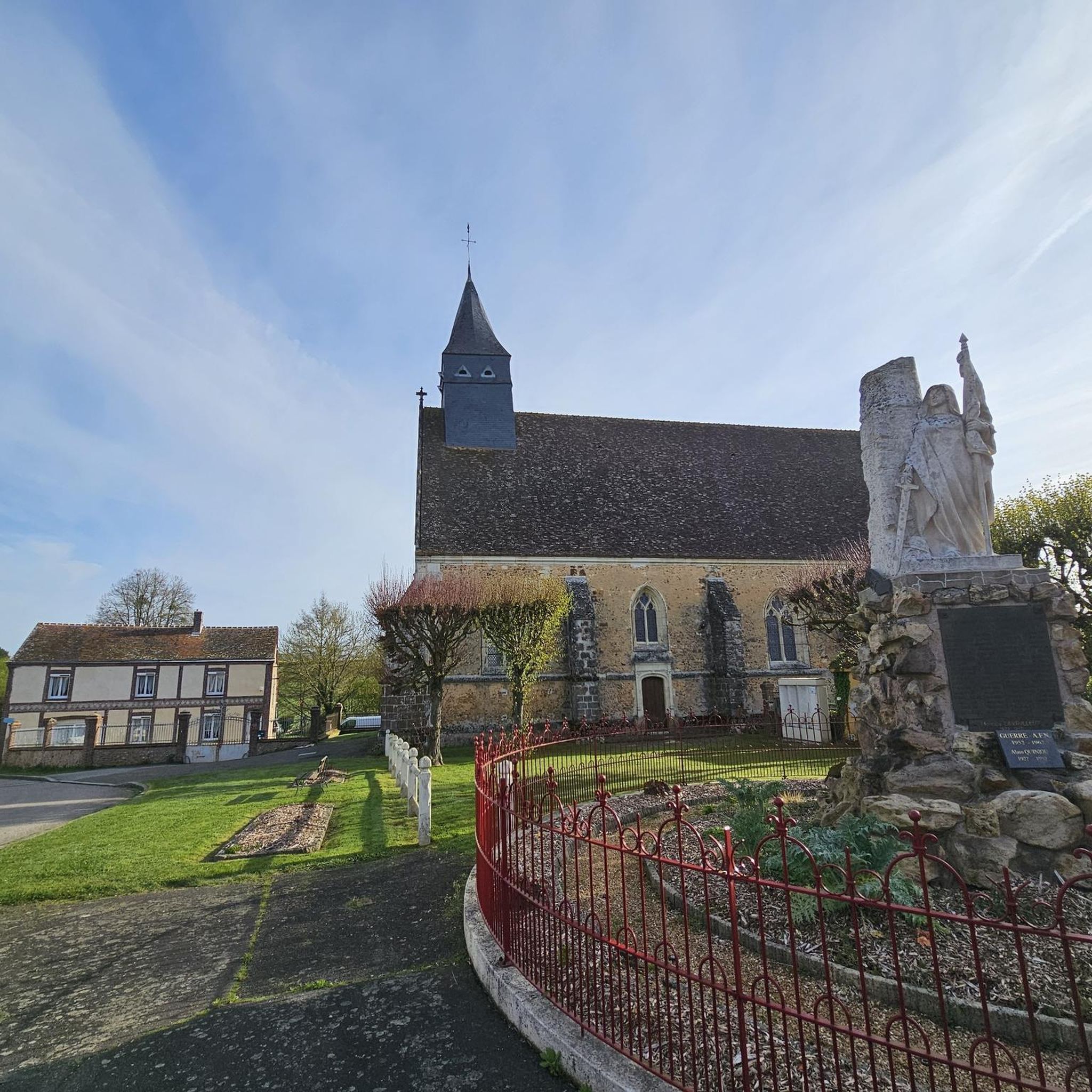
Of Romanesque origin, the church, surrounded by a cemetery, has a curious bell tower supported by machicolations and uprights of sandstone, making it one of the most unique in the region. Perhaps it was originally a bell gable, later augmented by a platform supported by these machicolations? In front of the entrance, a small building called a "caquetoire" (a small meeting place) allows the faithful to gather and converse. Inside the church, the furnishings date from the 18th and 19th centuries: a marble high altar and its gray-painted wooden altarpiece (18th century) – a painted wooden altarpiece of St. Joseph (late 18th or early 19th century) an altarpiece for the altar of the Virgin Mary (19th century) a baptismal font in red-veined marble (19th century) a waxed wooden pew (18th century) a waxed wooden choir stall upholstered in velvet paintings: the Assumption of the Virgin Mary by Octave Hauser (1839) and the Annunciation (18th century) The stained-glass windows date from 1874. The church and the eclipse A bit of history: The parish, established in the 13th century, was part of the deanery of Courville. The church's patron saint, Luperche or Luperchius, gave his name to the village. We must go back to the 4th century to find the first trace of this saint: At that time, Dacius, governor of the part of Spain that included Catalonia, Aragon, and the Kingdom of Valencia, was one of the most cruel ministers of persecution. Incited by the emperors Diocletian and Maximilian, he had eighteen confessors of Jesus Christ executed in the city of Zaragoza. In their honor, the poet Prudentius wrote hymns, and among these confessors, a certain martyr named Luperche became the patron saint of our church.
0
0
The inhabitants of Margon can admire the church of Notre-Dame du Mont-Carmel, proudly dominating the old town on its rocky spur, at the corner of two green valleys. It was later given an aisle during the 16th century, but its Romanesque portal has been preserved. It reigns benevolently over the old cemetery which surrounds it and which has recently been enlarged due to the increase in the population of the commune.
0
0


Occupying mainly a hill dominated by a curious dome-shaped bell tower, the territory of Brunelles has a rich historical past, sometimes even bordering on the marvelous. If the very ancient occupation of the place is attested to in Bois-Jahan, the disappearance of the village of La Ferrière and its church of La Madeleine during the Hundred Years' War (14th-15th century), give the hamlet of Vieux Murs a legendary air... A fortified castle and a chapel below probably stood here. Furthermore, because the lords of Brunelles who were the vassals of the Rotrou, were required to guard the Saint-Jean castle, one of the towers of the Nogent castle still bears the name of the village today. Situated on a rocky peak, the Saint-Martin church is visible from afar. Built in the 15th century, most of it, including the spire, was unfortunately destroyed by fire, and only the stone choir with a semi-circular vault is original. The nave is lit on each side by three flamboyant-style windows, and in the choir you can admire the beautiful stone altarpiece that has recently been restored. You will also notice an oculus on the south face, found during the 1998 restoration campaign, and enriched with a recent stained glass window illustrating the Creation. Finally, visitors should not fail to stop by the relics of the young Alexander, tortured for refusing to renounce his faith in Christ, as were other saints called martyrs for this, from the Greek "witnesses". There are thus many relics in our churches: they can be found at the first origin of basilicas, often built on ancient funerary areas on the outskirts of ancient cities. The relics of the saints are to be considered as the very humble signs of what their bodies were, the evocation of their human condition: it is with their bodies that the saints acted, thought, prayed, worked, suffered and experienced death. The monastery of the Val d’Arcisses was the first foundation of the monk Bernard d’Abbeville, later called Bernard de Thiron, because the monks of St.-Denis de Nogent-le-Rotrou would not let him do it! Bernard had to settle nearby, in the parish of Gardais, under the protection of the bishop of Chartres, Saint Yves and de Rotrou, Count of Perche. He had been established in a manor located between Brunelles and Ozée. The Notre-Dame-du-Val-d’Arcisses abbey welcomed Benedictine nuns during the 17th and 18th centuries. Destroyed during the Revolution, all that remains is the gatehouse, a beautiful arch embedded in a façade. One of the monks' major works was to dig the Arcisses canal, a diversion from the Cloche: it irrigated the abbey's lands and supplied the fountain which flowed near the Notre-Dame church in Nogent-le-Rotrou.
0
0
Church built in the 12th and 16th centuries. Listed apse from the 12th century. 4-storey bell tower. Corner buttress bell with staircase turret. Renaissance portal. Large Gothic window above the portal. 16th century roof and nave. Stone statue of a bishop, 16th century paintings.
0
0
Between the green hills of Perche, the Saint-Denis church contains a 16th century baptistery listed as a Historic Monument. Explanatory plaque at the entrance. This church is Romanesque in style and has a rounded apse and a quadrangular bell tower. The baptismal font dates from the 16th century. The church is surrounded by walls made of Saint-Denis stone.
0
0
Frequently Asked Questions
What kind of terrain can I expect when road cycling around Combres?
The Combres region offers a diverse landscape for road cycling, characterized by rolling terrain, expansive agricultural fields, and scattered woodlands. You'll encounter quiet country roads connecting historical landmarks like churches and châteaux. Elevations are generally moderate, though some extended routes feature longer climbs.
Are there road cycling routes suitable for beginners in Combres?
Yes, Combres offers several easy road cycling routes perfect for beginners. One popular option is the Shaded section in the forest – Frazé loop from L'Estre des Champs, which is 29.3 miles (47.2 km) long and leads through pleasant forested areas. Another accessible route is the Saint Eliph Church – Friaize Church loop from Les Corvées-les-Yys, covering 37.3 miles (60.0 km) with moderate elevation.
Where can I find challenging road cycling routes with significant climbs in Combres?
For those seeking a challenge, Combres has routes with notable elevation gains. The Saint Martin Church – Château de Frazé loop from Montlandon is a difficult 64.0 miles (103.1 km) route featuring nearly 1,000 meters of elevation gain through rural landscapes, providing a demanding ride.
What are the typical distances and elevations for road cycling routes in Combres?
Road cycling routes in Combres vary significantly in distance and elevation. You can find shorter, easier loops around 30 miles (48 km) with a few hundred meters of ascent, up to challenging routes exceeding 60 miles (96 km) with close to 1,000 meters of climbing. The region offers options for all fitness levels.
Are there any circular road cycling routes in Combres?
Yes, many of the road cycling routes in Combres are designed as loops, allowing you to start and finish in the same location. Examples include the popular Saint Martin Church – Château de Frazé loop from Montlandon and the Château de Frazé – Saint Martin Church loop from Montlandon, both offering extensive tours of the countryside.
What historical sites or landmarks can I see along the road cycling routes in Combres?
The routes around Combres often pass by charming historical sites. You might cycle past the impressive Château de Frazé, the historic Saint Martin Church, or the serene Thiron-Gardais Abbey Gardens. These landmarks add a cultural dimension to your ride through the French countryside.
What do other road cyclists enjoy most about cycling in Combres?
The road cycling experience in Combres is highly rated by the komoot community, with an average score of 4.3 stars from nearly 20 reviews. Cyclists often praise the region's mix of open fields, historic villages, and sections of quiet woodland, as well as the variety of routes suitable for different ability levels.
Are there any scenic viewpoints along the road cycling routes in Combres?
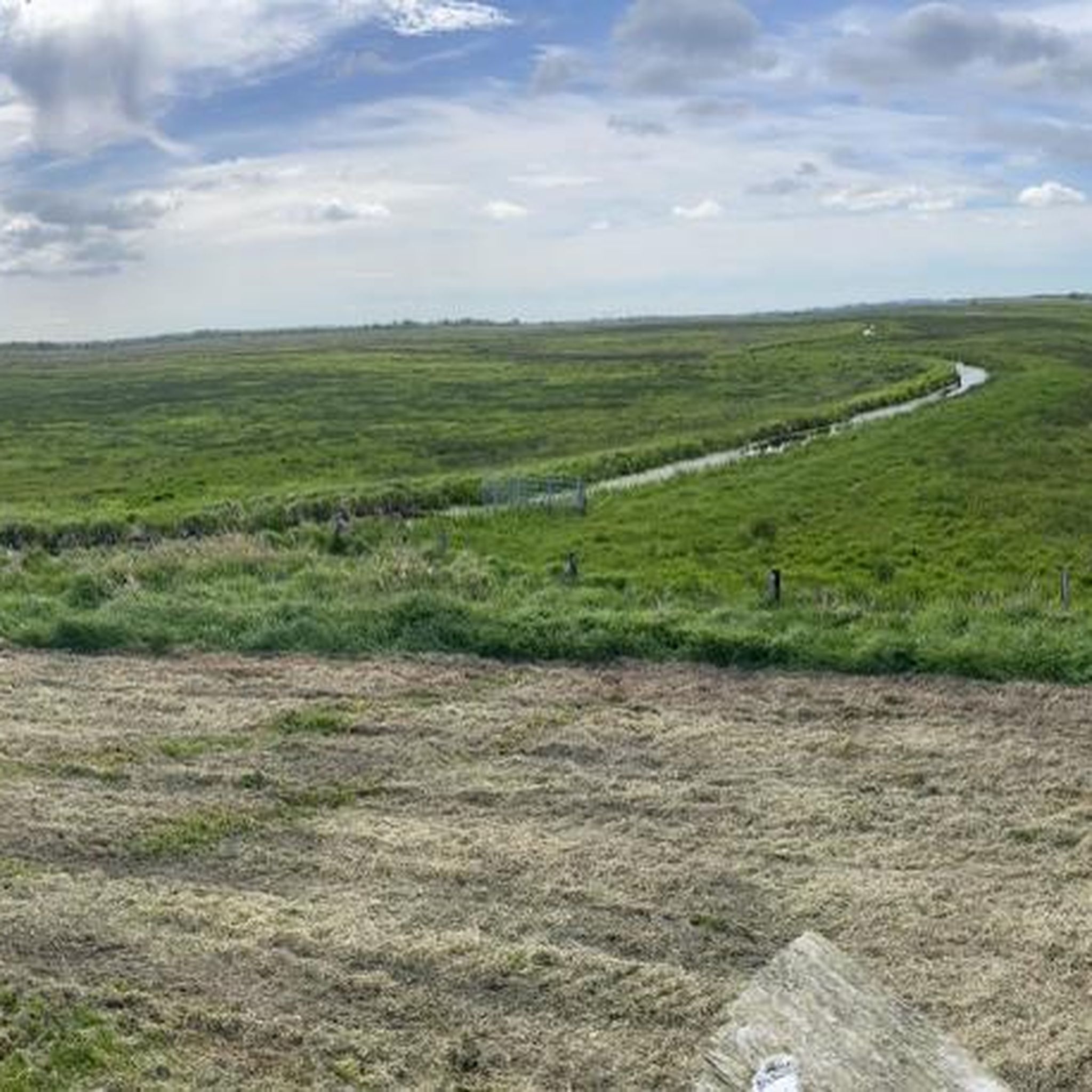
Yes, the rolling landscape of Combres offers several opportunities for scenic views. Many routes provide extensive vistas of the countryside, and you might encounter specific viewpoints such as the Lovely stretch through the fields, which offers picturesque panoramas of the agricultural surroundings.
What is the best season for road cycling in Combres?
While specific data isn't provided, generally, spring and autumn offer the most pleasant conditions for road cycling in the French countryside, including Combres. Temperatures are milder, and the scenery is vibrant. Summer can be enjoyable, but be prepared for warmer weather, especially during midday. Winter can be cold and potentially wet.
Where can I typically access trailheads or find parking for road cycling routes in Combres?
Many road cycling routes in Combres start from local villages or towns, such as Montlandon or L'Estre des Champs. These locations often provide convenient parking options, allowing you to easily begin your ride and explore the surrounding areas. It's advisable to check specific route details for recommended starting points.
Are there any unique or particularly memorable road cycling routes in Combres?
Beyond the popular loops, the region offers routes that highlight its distinct character. For instance, the Orrouer Church – The banks of the Eure loop from Les Corvées-les-Yys provides a moderate 38.8 miles (62.5 km) ride that combines historical interest with natural beauty along the river, offering a memorable experience.
Most popular attractions around Combres

Get inspired with the komoot mobile app


Explore more
Browse the best Road cycling routes in other regions.
