Attractions and Places To See around La Cauchie - Top 4
Attractions and places to see around La Cauchie, a small commune in the Pas-de-Calais department of Hauts-de-France, provide a tranquil rural experience. This area is characterized by its serene countryside, historical sites, and opportunities for outdoor activities. Visitors can explore local landmarks and enjoy the peaceful environment southwest of Arras.
Best attractions and places to see around La Cauchie
- The most popular attractions is Château de Bavincourt, a castle and historical site. An old manor house once stood on…
Last updated: May 11, 2026
The Carré des Sources
Highlight • Other
Translated by Google •
Tip by

Château de Bavincourt
Highlight • Castle
mairie.bavincourt.fr/?page_id=304
Translated by Google •
Tip by
Sign up now to discover places like this
Get recommendations on the best single tracks, peaks, & plenty of other exciting outdoor places.
Sign up for free
Château de Barly
Highlight • Castle
arraspaysdartois.com/visites-heritage/le-chateau-de-barly
Translated by Google •
Tip by
Eglise du Lattre Saint-Quentin
Highlight • Other
Its patron …
Translated by Google •
Tip by

Douce France
Highlight • Other
Translated by Google •
Tip by

Sign up for free to discover even more attractions around La Cauchie.
Sign up for free
Already have an account?
Start today with a free account
Your next adventure awaits.
Login or Signup


Tips from the Community

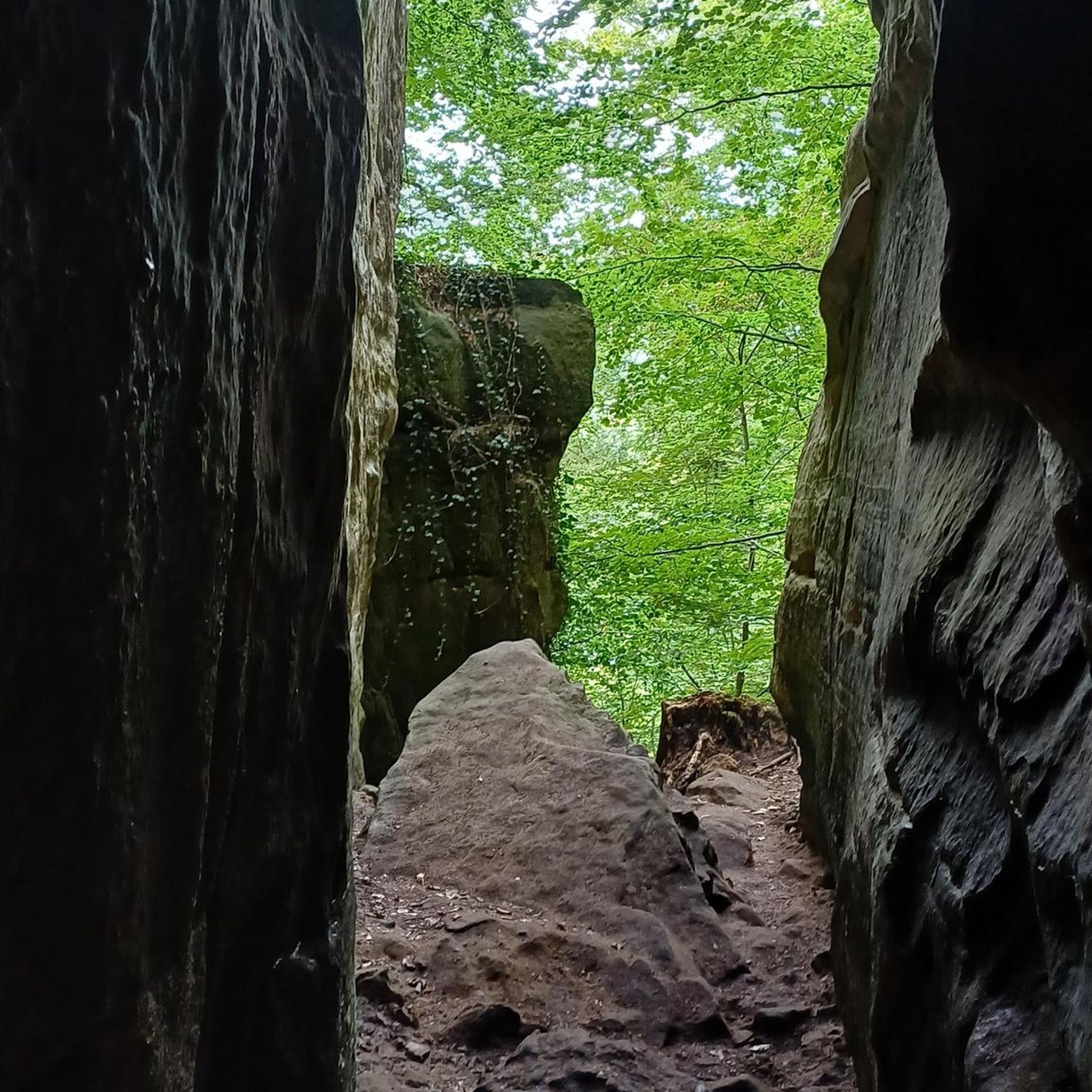
Bizarre name of the highlight, as if you are standing at this location and don't know you are in France.
0
0

Rebuilt in 1792, the church was partly destroyed during the revolution after seeing its furniture piled up and burned inside; it is said that only the walls remained. Its patron saint is St Quentin. The church was purchased by the son Aimable Billot de Lattre on 7 Floréal year 9, (May 7, 1801) from the Fabrique, for the sum of 58,300 francs. The bell tower, although restored in recent years, still appears to be the bell tower of the old church which dates back to a very remote period. It bears the stamp of the 13th century. The current bell dates from 1890 (700kg) It is called Marie, was baptized by Mr. LEFIN, dean of Avesnes-le-Comte, and had as godfather Mr. Brazier, Mayor, and as godmother Me Desaulty. As a relic, the church firstly has a considerable relic (femur bone) of St Quentin, a gift made by the church of St Quentin to Mr. Flajollet priest of Lattre at the beginning of this century as well as a fairly important relic from St Vaast, one from St Arnaud and one from St Wulgan. There was once a very popular pilgrimage in honor of St Quentin. It is difficult to assign the time when this pilgrimage began. But as far back as the church's account registers go, that is to say in the year 1570, there is question of the income made by the sale to pilgrims of coupons to burn and images on the days of the feasts of St Quentin.
4
0

At the beginning of the 18th century, the flow of the Crinchon (river of about twenty kilometers which flows between Bailleulmont and Saint-Nicolas before flowing into the Scarpe) is weak, irregular and its waters are of poor quality. The city of Arras needs healthy and abundant water for the inhabitants and for the drinking troughs of the cavalry barracks. In 1723, at his request, the springs that gush out in Brétencourt, a hamlet of Rivière, were collected in a reservoir, it is a vast rectangular basin surrounded by brick walls now called "Carré des sources". Its dimensions: 33 m long, 11 m wide and 8 m deep. The works were carried out by the Military Engineering on the orders of the king, who financed them, as recalled by a sandstone sealed in a wall: "In the year 1723, under the reign of Louis XV, the sources of the Crinchon were sought and enclosed in this basin at the expense of the king" Le Carré des sources delivers 64 liters per second of water that is extremely fresh and remarkably clear. The stream thus formed crosses the park of the castle and joins the initial bed of the Crinchon, after a course of 500 m. The flow being capricious, the system was completed by the digging of a few artesian wells, from the end of the 18th century.
1
0
Château de Bavincourt is a castle located in the commune of Bavincourt, in the Pas-de-Calais department of France. An old manor house used to stand on the site of the present castle and its motte was still there during the construction of the latter; however, not much is known about it. The current castle was built by François Deslions, nephew of Jean-Louis Deslions, canon and dean of Saint-Omer, who had inherited the lands of Bavincourt.
1
0
to know more about this castle: http://mairie.bavincourt.fr/?page_id=304
2
0
The history of this castle as well as practical information are on the site https://www.arraspaysdartois.com/visites-heritage/le-chateau-de-barly/
1
0
Frequently Asked Questions
What historical sites can I explore in and around La Cauchie?
La Cauchie and its surroundings offer several historical points of interest. You can visit Château de Bavincourt, an impressive castle built by François Deslions on the site of an old manor. Another significant site is The Carré des Sources, a historical water reservoir from 1723 that supplied water to Arras. Don't miss Eglise du Lattre Saint-Quentin, a church rebuilt in 1792 with a bell tower dating back to the 13th century. Within La Cauchie itself, you'll find L'église Saint-Martin, built in 1741, and Le Monument aux Morts, commemorating soldiers from 1914-1918.
Are there opportunities for outdoor activities like hiking near La Cauchie?
Yes, the rural setting of La Cauchie is ideal for outdoor activities, especially hiking. The area offers various trails, including the popular "Sentier de la Tête Mahu," a 12 km route that takes about 3 hours. For more options, you can explore numerous hiking routes listed in the Hiking around La Cauchie guide, such as the "Douce France loop from Beaumetz-lès-Loges" or the "Ruines du donjon et motte loop from Bailleulval".
What kind of natural landscapes can I expect to see in La Cauchie?
La Cauchie is characterized by its tranquil, undeveloped rural landscape. You can expect serene countryside, fields, and peaceful environments perfect for those seeking quiet and a connection with nature. The commune is also relatively close to the Scarpe-Escaut Regional Natural Park, offering further opportunities to explore natural flora and enjoy the peaceful surroundings.
Can you tell me more about the historical significance of The Carré des Sources?
The Carré des Sources is a historically significant water reservoir built in 1723. Its purpose was to collect springs from Brétencourt to supply Arras with healthy and abundant water, delivering 64 liters per second. The works were financed by the king, Louis XV, and the reservoir measures 33 meters long, 11 meters wide, and 8 meters deep. It played a crucial role in the region's water supply for centuries.
What is the history behind Château de Bavincourt?
Château de Bavincourt is a castle located in the nearby commune of Bavincourt. The current castle was built by François Deslions, who inherited the lands. It stands on the site where an old manor house once existed, though much about the original structure is unknown. The castle represents a significant piece of local architectural and aristocratic history.
Is Eglise du Lattre Saint-Quentin an important historical church?
Yes, Eglise du Lattre Saint-Quentin is an important historical church. It was rebuilt in 1792 after being partially destroyed during the French Revolution. Its bell tower is particularly ancient, bearing the stamp of the 13th century. The church also holds significant relics, including a femur bone of St Quentin, and was once the site of a very popular pilgrimage in honor of its patron saint.
What cycling routes are available near La Cauchie?
For road cycling enthusiasts, there are several routes around La Cauchie. You can find detailed options in the Road Cycling Routes around La Cauchie guide. Popular routes include the "Crinchon – Chemin de Rivière loop from Berles-au-Bois" (77 km) and the "Château de Barly – Memory Cycle Route loop from La Herlière" (35 km), which offers an easier ride.
Are there any mountain biking trails in the area?
Yes, mountain biking is also an option near La Cauchie. The MTB Trails around La Cauchie guide lists several routes. Examples include the "English Cemetery loop from Ransart" (53 km) and the "Barly Castle – Forest Trail loop from Saulty" (72 km), which is considered a more difficult ride.
What is the best time of year to visit La Cauchie for outdoor activities?
La Cauchie offers a tranquil rural experience, making it suitable for outdoor activities throughout much of the year. Spring and autumn generally provide pleasant temperatures for hiking and cycling, with beautiful natural scenery. Summer is also good for exploring, though it can be warmer. The primary appeal is its serene, undeveloped countryside, which can be enjoyed in various seasons.
Are there any family-friendly attractions or activities in La Cauchie?
While La Cauchie itself is a small commune focused on rural tranquility and historical sites, the general area's hiking trails and peaceful countryside can be enjoyed by families looking for outdoor exploration. The historical sites like Château de Bavincourt or The Carré des Sources offer educational opportunities for older children.
Where can I find local products or a snack while exploring?
If you're out exploring and need a snack or local products, you might find options at places like Grocery for a snack!. This highlight indicates a spot where you can stop to buy local provisions, which can be very useful during your outdoor adventures.
What makes La Cauchie a unique place to visit?
La Cauchie stands out for its serene, undeveloped rural character, offering a quiet escape southwest of Arras. Its uniqueness lies in the blend of historical sites, such as 18th-century churches and water reservoirs, with ample opportunities for peaceful outdoor activities like hiking and cycling through its picturesque countryside. It's a destination for those seeking tranquility and a connection with local history and nature.
Are there any war memorials or significant historical monuments in La Cauchie?
Yes, La Cauchie has a significant historical monument: Le Monument aux Morts (War Memorial). This monument commemorates the conflicts of 1914-1918 and bears the epitaph "LA CAUCHIE A SES HEROS" (La Cauchie to its Heroes). The cemetery of La Cauchie also holds the graves of Australian and British soldiers who fell in March 1918, including Richard Spearing.

Get inspired with the komoot mobile app


Explore more
Still not found the Highlight you’re looking for? See guides of the top attractions in other regions:
