Attractions and Places To See around Guillonville - Top 7
Best attractions and places to see around Guillonville. Guillonville, a commune in the Eure-et-Loir department of France, offers access to a variety of historical, cultural, and natural sites. The surrounding region is characterized by its historical buildings, scenic landscapes, and points of interest. Visitors can explore a range of landmarks and cultural heritage within the broader area.
Best attractions and places to see around Guillonville
- The most popular attractions is Château de Cambray, a castle that features an orangery…
Last updated: May 20, 2026
Château de Cambray
Highlight • Castle
Translated by Google •
Tip by

Lignerolles Mill
Highlight • Viewpoint
Translated by Google •
Tip by

Sign up now to discover places like this
Get recommendations on the best single tracks, peaks, & plenty of other exciting outdoor places.
Sign up for free
Saint-André Church of Patay
Highlight • Religious Site
In the 7th century, the Benedictine abbey of Bonneval created a priory-curate. Its existence is confirmed by a bull from Pope Gregory second half of the 16th century.
Translated by Google •
Tip by

Saint Peter's Church
Highlight • Other
Translated by Google •
Tip by
Church of Saint Christine
Highlight • Other
Translated by Google •
Tip by
Sign up for free to discover even more attractions around Guillonville.
Sign up for free
Already have an account?
Start today with a free account
Your next adventure awaits.
Login or Signup
Popular around Guillonville


Tips from the Community

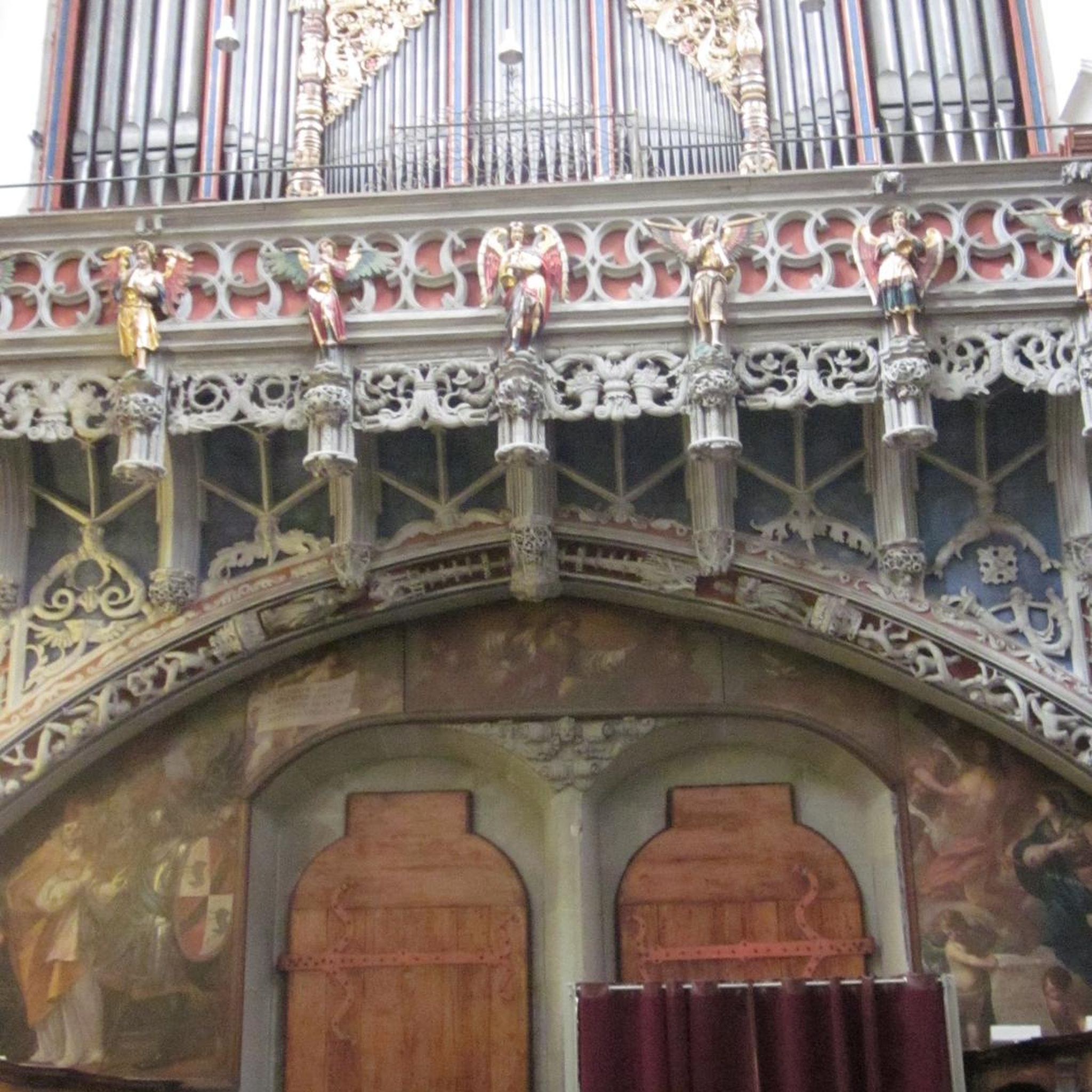
The Sainte Christine church represents a heritage of the rural and religious world characteristic of Beauce, the "breadbasket" of France since the Middle Ages. The Romanesque nave dates from the 12th century and was given a bell tower in the 18th century. The spire then peaked at 28 meters high, visible from afar from the surrounding countryside. In 1835, a hurricane damaged the roof of the bell tower. In 1893, lightning ignited the spire which burned almost entirely. The traces are still visible today. It would take almost 25 years for the church to regain its bell tower, reduced by half to 17 meters in height. The heritage to be restored is in line with the many religious buildings in this area such as the Saint Sébastien church in Baignolet, listed as a Historic Monument.
0
0
Formerly, the church was the presentation of the abbot of Bonneval because the Saint-Florentin abbey had a priory in Cormainville. A walled arcade, still visible to the south of the choir, represents an ancient communication between the church and the priory. The building was registered as a historic monument in 1927.
0
0
The Saint André church (13th-15th-16th centuries) In the 7th century, the Benedictine abbey of Bonneval created a priory-curate. Its existence is confirmed by a bull from Pope Gregory second half of the 16th century. In 1793 the church was desecrated and transformed into wine and spirits warehouses. In 1801, the church was returned to worship and changed diocese: from the diocese of Chartres, to which it belonged before the Revolution, it passed to the diocese of Orléans, notably for reasons of distance: Chartres is 48 km from Patay then that Orléans is only 27 km away. The church is 30 m long and 17 m wide. The oldest parts are located near the large porch (13th century). One of the pillars of the nave is decorated with a vestige of Danse Macabre from the mid-15th century. A small masonry door on the right communicated with the old priory, of which ruins remain to the south of the church. The choir dates from the 14th century; the apse wall was decorated with paintings at the end of the 19th century, the chapels were then redeveloped and equipped with new stained glass windows. The keystones of the large nave were made from casts taken from the figurines which adorn the Thesis Room of the University of Orléans, built in 1411. The bell tower, located to the north of the choir, would be an old watchtower. Its pinnacles and eight openings were made after the Wars of Religion. The four bells were melted in 1868. The largest was cracked by a Prussian shell in 1870 and was recast in 1871. Since that year, Ernestine (809 kg, 1 m 12 in diameter at the base, sounding the F), Gabrielle (550 kg, 0.981 m in diameter, sounding the ground), Anne (398 kg, 0.573 m in diameter) and Marie (222 kg, 0.724 m in diameter, sounding the C) give rhythm to the daily life of the small town of Patay, old Beauceron railway junction. On August 15, 1944, an ammunition train was blown up at Patay station. The station was blown up, except for the carriage shed, and all the windows in the town were shattered. Luckily, a providential storm limited the damage. The only two stained glass windows that survived the explosion are those on the right side aisle which date from 1930 and relate the communion of Joan of Arc in the Patay church in 1429. The church was listed as a Historic Monument in 1925 by decree of October 6, 1925.
0
0

The Moulin de Lignerolles is one of the last pivotal windmills in the Loiret department. Built in 1848, this wooden mill belonged to Louis-Joseph Soulas, famous painter and director of the Orléans School of Fine Arts. You can admire the restored mill and its ingenious mechanism, as well as the panoramic view of the plain. The mill is open to the public on Sundays from 2:30 p.m. to 6 p.m., and also hosts various events throughout the year, such as a flea market, concerts and exhibitions. Visiting the Moulin de Lignerolles is an excellent way to discover the heritage and charm of the Beauceron countryside.
2
0

The Cambray orangery is part of the Cambray estate acquired by François Lambert, squire and adviser to the king, auditor in his chamber of accounts, on March 28, 1575 from the nobleman of Oinville, lord of Puiset. The place called Cambray, Combarius under the Romans, was to be a camp. Combrée also means "bushy places", or Cambray is located along the Conie, bordered by reedbeds. The 2 wings of the rear facade were built at the end of the 17th century, beginning of the 18th century by Jacques Lambert, private master of water and forests of the Duchy of Orléans. We note that they were built after the other parts of the castle, with a different aspect of construction, stone on the one hand and bricks around the windows on the other.
0
0
Frequently Asked Questions
What historical sites can I visit near Guillonville?
The region around Guillonville is rich in history. You can explore the Château de Cambray, featuring 17th and 18th-century architecture and an orangery. Other notable historical religious buildings include Saint Peter's Church, registered as a historic monument in 1927, and the Saint-André Church of Patay, which dates back to the 13th century and features a vestige of a Danse Macabre. The Church of Saint Christine, with its 12th-century Romanesque nave, also offers a glimpse into the area's rural and religious heritage. Further afield, the UNESCO World Heritage site of Chartres Cathedral and the historic Château de Maintenon are significant cultural landmarks in the Eure-et-Loir department.
Are there any unique viewpoints or natural features to see?
Yes, the Lignerolles Mill, a restored pivotal windmill built in 1848, offers a panoramic view of the surrounding plain. Beyond the immediate vicinity, the scenic Loir Valley provides beautiful landscapes. The Eure-et-Loir department also features remarkable gardens such as 'Les prés-Culand' and the 'Parc Floral de la Source', as well as the Arboretum des Grandes Bruyères.
What outdoor activities are available around Guillonville?
The area around Guillonville and the broader Eure-et-Loir department is well-suited for various outdoor activities. You can find numerous routes for cycling and mountain biking. Canoeing is popular on the gentle rivers, and horse-drawn carriage rides or horse riding with the emblematic Percheron horses are also available. For specific routes, explore the Road Cycling Routes around Guillonville, Running Trails around Guillonville, and Cycling around Guillonville guides.
Are there family-friendly attractions near Guillonville?
The Lignerolles Mill is considered family-friendly, offering insights into its mechanism and a panoramic view. The Saint-André Church of Patay also falls into this category, providing a historical experience suitable for families. The wider Eure-et-Loir region, with its castles and natural parks, offers many opportunities for family outings.
What is the best time to visit Guillonville and the surrounding attractions?
The Eure-et-Loir region, including Guillonville, is generally pleasant to visit during spring and summer (May to September) when the weather is mild and conducive to outdoor activities and exploring historical sites. The Lignerolles Mill, for example, is open to the public on Sundays from 2:30 p.m. to 6 p.m. during these months and hosts various events.
Can I find local markets or cultural events in the area?
While Guillonville itself is a small commune, nearby towns in the Eure-et-Loir department host local markets throughout the week, such as Voves, Ouzouer-le-Marche, Bonneval, Toury, and Châteaudun. These markets are excellent places to experience local life and find regional produce. Additionally, Guillonville is scheduled to host the 'Rencontre astronomique 'Shooting Stars and the Moon'' from May 22 to 25, 2026.
What kind of historical architecture can I expect to see?
The region showcases a range of historical architecture. The Château de Cambray features architectural elements from the 17th and 18th centuries, including distinctive stone and brickwork. Churches like Saint-André Church of Patay and Church of Saint Christine display Romanesque and Gothic influences, with parts dating back to the 12th and 13th centuries. The broader Eure-et-Loir region is also home to masterpieces like Chartres Cathedral, a prime example of Gothic architecture.
Are there any easy walking routes or trails near Guillonville?
Yes, the area offers various walking and cycling routes. While specific easy walking trails directly in Guillonville are not detailed, the general landscape of the Beauceron countryside is suitable for leisurely strolls. For structured routes, you can explore the Running Trails around Guillonville guide, which includes routes of varying distances and difficulties, some of which are suitable for walking.
What do visitors enjoy most about the attractions around Guillonville?
Visitors appreciate the historical depth and architectural beauty of sites like the Château de Cambray and the various historical churches. The Lignerolles Mill is particularly enjoyed for its restored mechanism and the panoramic views it offers. The overall appeal lies in discovering the rich heritage and scenic countryside of the Eure-et-Loir department.
Can I find cafes or pubs in Guillonville?
Guillonville is a small commune, and while specific cafes or pubs are not detailed in the immediate vicinity, you will find local amenities in nearby towns and villages. Exploring these charming communities will likely lead you to local establishments where you can enjoy a coffee or a drink.
Are there opportunities for cycling or mountain biking?
Absolutely. The Eure-et-Loir department actively promotes outdoor adventures, with many routes and tracks suitable for cycling and mountain biking. You can find detailed routes in the Road Cycling Routes around Guillonville and Cycling around Guillonville guides, offering options for various skill levels.
What is the significance of the churches in the area?
The churches around Guillonville hold significant historical and religious importance. Saint Peter's Church has ties to the abbot of Bonneval and a priory, with a visible walled arcade. The Saint-André Church of Patay, a listed Historic Monument, features elements from the 13th to 16th centuries and unique stained-glass windows depicting Joan of Arc. The Church of Saint Christine showcases 12th-century Romanesque architecture, reflecting the rural and religious heritage of the Beauce region.
Most popular routes around Guillonville

Get inspired with the komoot mobile app


Explore more
Still not found the Highlight you’re looking for? See guides of the top attractions in other regions:
