Attractions and Places To See around Noviant-Aux-Prés - Top 20
Best attractions and places to see around Noviant-Aux-Prés include historical sites and natural features within the Meurthe-et-Moselle department of France. This commune is known for its significant World War I remembrance sites and its location near the Lorraine Regional Natural Park. The area features deciduous forests, rivers, and cultural landmarks, offering opportunities for exploration.
Best attractions and places to see around Noviant-Aux-Prés
- The most popular attractions is Villevaux Mill, a 17th-century building erected on the Esch. This mill and…
Last updated: November 21, 2026
Carmelite Cross
Highlight • Other
Translated by Google •
Tip by

Le Pétant National Necropolis
Highlight • Historical Site
Translated by Google •
Tip by

Sign up now to discover places like this
Get recommendations on the best single tracks, peaks, & plenty of other exciting outdoor places.
Andilly German military cemetery
Highlight • Historical Site
Translated by Google •
Tip by

Villevaux Mill
Highlight • Other
Translated by Google •
Tip by

Gézoncourt Book Exchange and Shelter
Highlight • Rest Area
Translated by Google •
Tip by
Sign up for free to discover even more attractions around Noviant-Aux-Prés.
Already have an account?
Start today with a free account
Your next adventure awaits.



Tips from the Community

The Andilly German War Cemetery is located 10 kilometers north of Toul and three kilometers outside of Andilly (Meurthe-et-Moselle). With 33,085 dead soldiers, it is the largest German World War II military cemetery in France. At the beginning of September 1944, Allied troops were pressing toward Germany. From the Rhône Valley to the Vosges Mountains and the Rhine Valley, fighting against the retreating German troops caused enormous losses on both sides. In 1944, the Americans established a temporary cemetery here for their nationals as well as for fleeing German troops who had fallen in combat. This temporary cemetery contained 5,000 graves. After the war, the Americans relieved their soldiers and reburied them in the American War Cemetery in Saint-Avold. Andilly then became a German military cemetery, where 5,000 victims were buried at the time. From Saint-Avold, 575 German soldiers were buried, and from Épinal-Dinozé, 4,891 died in the Andilly area. In total, the death toll at Andilly rose to 11,000. Following the Franco-German agreement on military graves in 1954, the Volksbund Deutsche Kriegsgräberfürsorge (German Military Graves Maintenance Service) was commissioned by the German government to develop this military necropolis for the victims of World War II in the early 1960s. Its members and benefactors funded its maintenance with their contributions and donations. Starting in 1957, the Volksbund began searching for and gathering in Andilly the bodies of German soldiers who had fallen west of Metz and in eleven departments: Nièvre, Saône-et-Loire, Côte-d'Or, Haute-Marne, Jura, Doubs, Haute-Saône, Vosges, Territoire de Belfort, Meuse, and Meurthe-et-Moselle. There were 2,000 unknown dead German soldiers in the Vosges who were transferred to Andilly. Thus, with 33,085 graves, the largest German military necropolis for the Second World War in France was created. In the spring of 1961, the cemetery was transformed from a garden perspective. The result was a solemn plot surrounded by bushes and trees. The cemetery was opened to the public in 1962.
0
0

Over an area of 6.2 ha, the necropolis brings together the bodies of 13,519 soldiers who died for France during the two world conflicts. In the upper part is the cemetery of the 14-18 conflict. It was created in 1915 following the battles at Bois-le-Prêtre and developed between 1920 and 1936. It brings together the bodies of 5,199 French soldiers and 1 Serb. In the lower part is located the military cemetery of the Second World War and a Captivity Memorial which houses the bodies of prisoners of war who died in captivity. 8200 French, 105 Soviets, 12 Poles in four ossuaries.
0
0
Memorial to the bloody Battles of Bois-le-Prêtre during the First World War. Initially a simple wooden cross which marked the highest point of the forest massif at 372 meters above sea level, a strategic point, it returned to its place of origin shortly after the war and was enshrined in the stone monument commemorating this battle which was inaugurated on September 23, 1923 by Raymond Poincaré.
0
0

The small church of St-Lambert is listed as a historical monument. There is also an old washhouse and a fountain to discover.
2
0
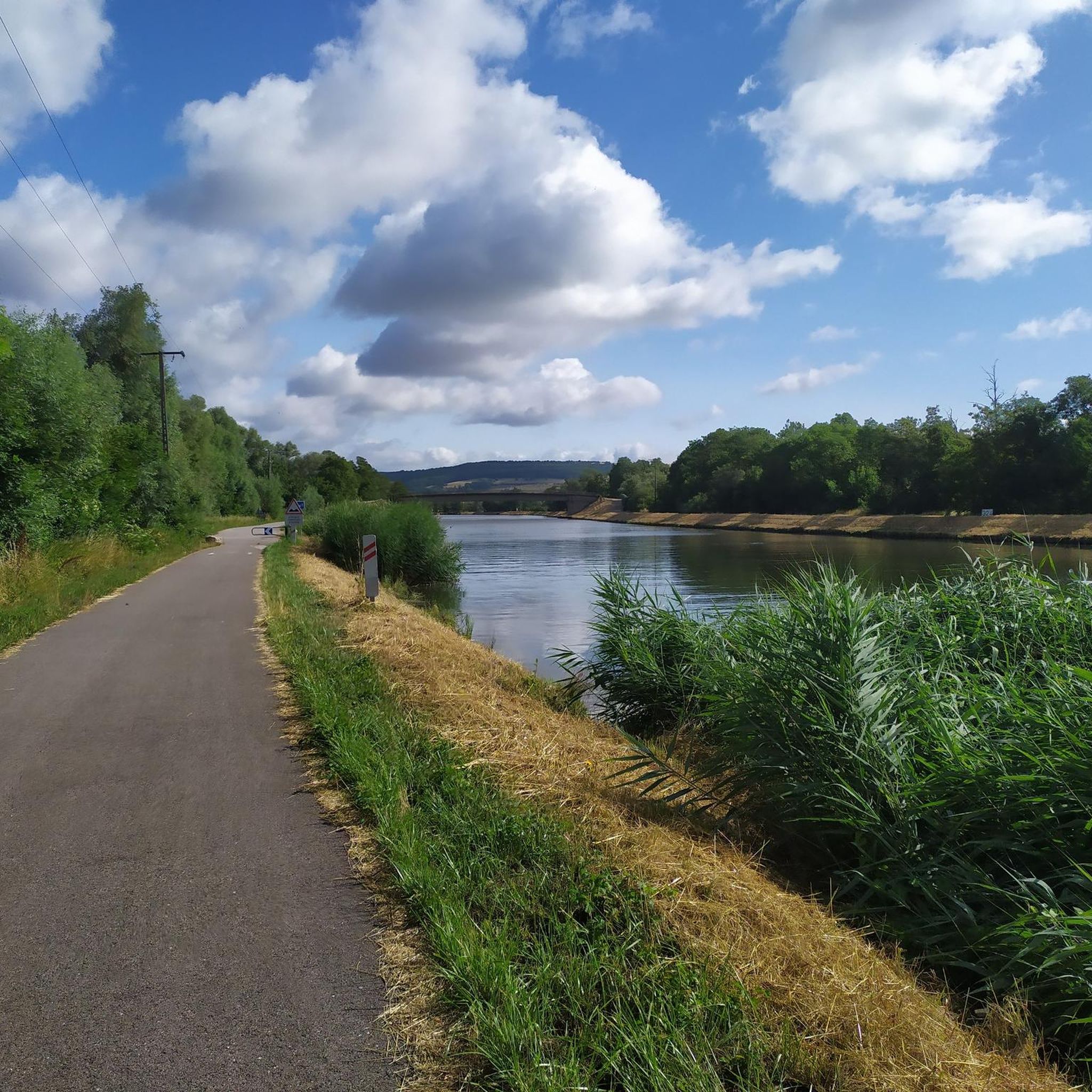
During periods of heavy rain this section can be difficult due to flooding.
3
0

From here begins a large forest area in which there are also remains of destroyed villages.
0
0

Gézoncourt is a pleasant little town located on the heights of the Esch valley. With no shops, the town nevertheless has a book library that can be used as a shelter in the event of bad weather.
5
0
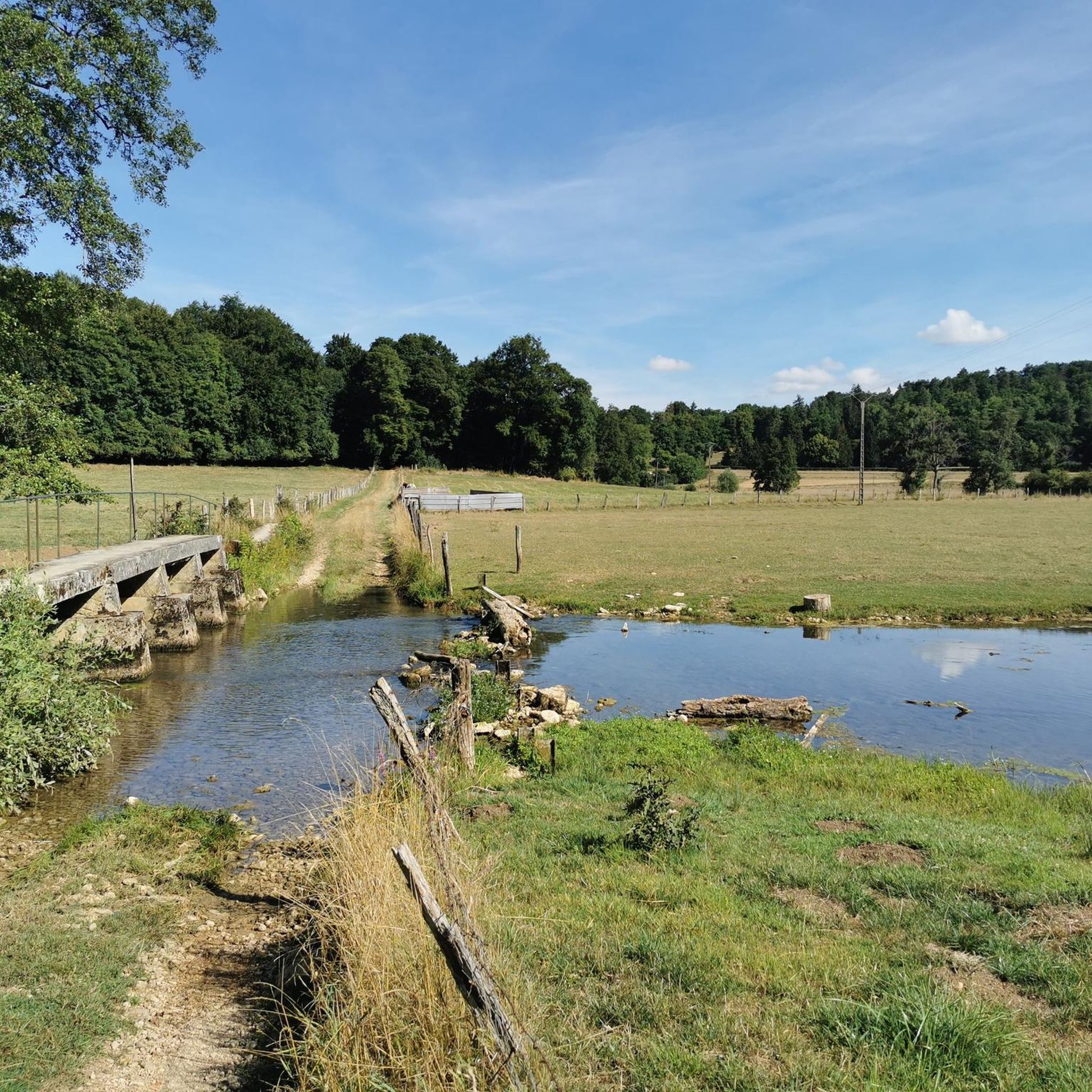
The Villevaux mill is a building erected on the Esch whose construction dates back to the 17th century. The former owner, who died in 2007, donated the mill and the entire property to the department in order to preserve its natural environment.
5
0
Frequently Asked Questions
What historical sites can I visit around Noviant-Aux-Prés?
The region is rich in history, particularly related to World War I. You can visit the Nécropole Nationale de Noviant-aux-Prés, a significant military cemetery honoring soldiers from the Woëvre battles. Another important memorial is the Carmelite Cross, which commemorates the bloody battles of Bois-le-Prêtre. The Le Pétant National Necropolis is also a very impressive and thought-provoking site.
Are there natural attractions or parks near Noviant-Aux-Prés?
Yes, Noviant-Aux-Prés is located within the broader Lorraine Regional Natural Park. This extensive park features deciduous forests, rivers, ponds, and wooded hills, offering rich biodiversity. It's an excellent area for enjoying nature and outdoor activities. The Villevaux Mill is situated on the Esch river, and its surrounding property was donated for natural environment preservation, making it a beautiful spot.
What outdoor activities are available around Noviant-Aux-Prés?
The area around Noviant-Aux-Prés is ideal for various outdoor activities. You can explore numerous hiking trails, road cycling routes, and running paths. For hiking, there are routes like the "Villevaux Mill – Old wash-house loop" and the "Neuf Pond of Mandres loop." Cyclists can enjoy routes such as the "Little Lorraine Switzerland loop." You can find more details on these activities in the dedicated guides for hiking, road cycling, and running around Noviant-Aux-Prés.
Are there hiking trails suitable for different skill levels?
Yes, you can find hiking trails for various skill levels. For example, the "Villevaux Mill – Le Trou du Gros Bois loop from Rogéville" and the "Villevaux Mill – Gouffre du Trou du Gros Bois loop from Gézoncourt" are considered easy. More moderate options include the "Villevaux Mill – Old wash-house loop from Rogéville" and the "Neuf Pond of Mandres loop." These routes offer diverse distances and challenges. Explore more options in the hiking guide.
Can I find family-friendly attractions in the area?
While Noviant-Aux-Prés itself is small, the surrounding region offers sites that can be interesting for families. The natural environment of the Lorraine Regional Natural Park provides opportunities for walks and exploring. The Gézoncourt Book Exchange and Shelter is a pleasant spot in a small town, offering a place to rest and even find a book, which can be a nice stop during a family outing.
What are some unique cultural landmarks to explore?
Beyond the war memorials, you can discover local cultural landmarks such as the Old wash-house of Gézoncourt, which is located on an old procession path and bears the name of Saint-Lambert, alongside a church and fountain. The Église Saint-Jean-Baptiste in Noviant-Aux-Prés, though rebuilt in the 19th century, preserves a remarkable Romanesque portal from its older structure, showcasing the village's long history.
Is Noviant-Aux-Prés suitable for dog owners looking for walks?
The extensive natural areas within the Lorraine Regional Natural Park, which surrounds Noviant-Aux-Prés, offer many opportunities for dog-friendly walks. Many hiking and walking trails are available, allowing you and your dog to explore the deciduous forests and natural landscapes. Always ensure to follow local regulations regarding dogs on trails and keep them on a leash where required.
When is the best time of year to visit Noviant-Aux-Prés?
The best time to visit Noviant-Aux-Prés largely depends on your preferred activities. Spring and autumn offer pleasant temperatures for hiking and cycling, with beautiful foliage in the fall. Summer is also good for outdoor activities, though it can be warmer. The historical sites are accessible year-round, but the natural park is most vibrant during the warmer months.
What do visitors particularly enjoy about the attractions near Noviant-Aux-Prés?
Visitors appreciate the historical significance and the natural beauty of the area. The war memorials like the Carmelite Cross are noted for their impressive and thought-provoking nature, with remnants of WWI battles still visible. The Villevaux Mill is enjoyed for its picturesque setting in a beautiful valley. The komoot community has contributed 24 photos and 24 upvotes, highlighting the appeal of these sites.
Are there any accessible attractions for visitors with mobility concerns?
Information on specific wheelchair-accessible attractions is limited. However, the Nécropole Nationale de Noviant-aux-Prés, as a national necropolis, is typically designed with pathways that may accommodate wheelchairs, though it's advisable to check their official site for specific accessibility details. Natural trails may vary in accessibility depending on terrain and weather conditions.
Where can I find parking when visiting attractions?
For historical sites like the Nécropole Nationale de Noviant-aux-Prés, designated parking areas are usually available. For smaller, more rural attractions like the Villevaux Mill or the Old wash-house, parking might be found in nearby village centers or small pull-offs. It's recommended to check local signage upon arrival.
What kind of terrain can I expect on trails near Noviant-Aux-Prés?
Trails around Noviant-Aux-Prés, particularly within the Lorraine Regional Natural Park, feature diverse terrain. You can expect paths through deciduous forests, along rivers, and over wooded hills. Some sections, especially near the Villevaux Mill, can be difficult due to flooding during periods of heavy rain. Generally, trails range from easy, relatively flat paths to moderate routes with some elevation changes.

Get inspired with the komoot mobile app


Explore more
Still not found the Highlight you’re looking for? See guides of the top attractions in other regions:
